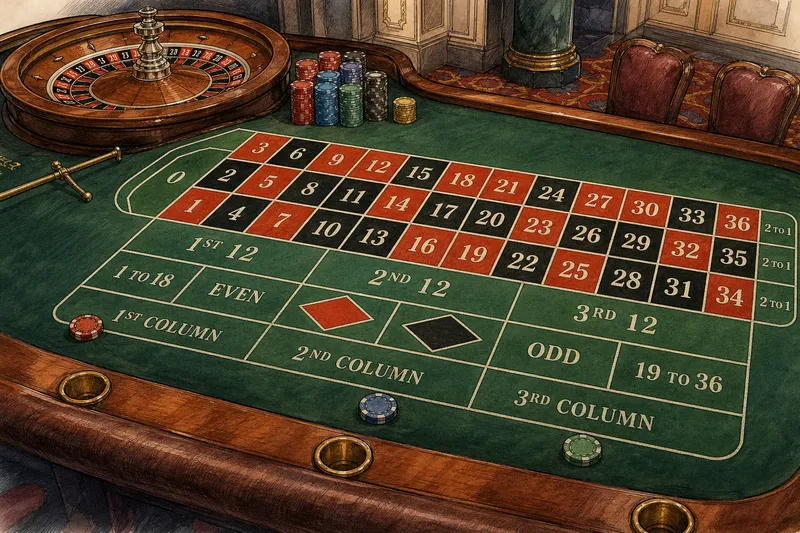
Why Roulette Results Boards Turn Chance into a Story
Roulette results boards turn past spins into a story. Learn how casino displays shape attention without making a sequence a forecast or a betting signal.
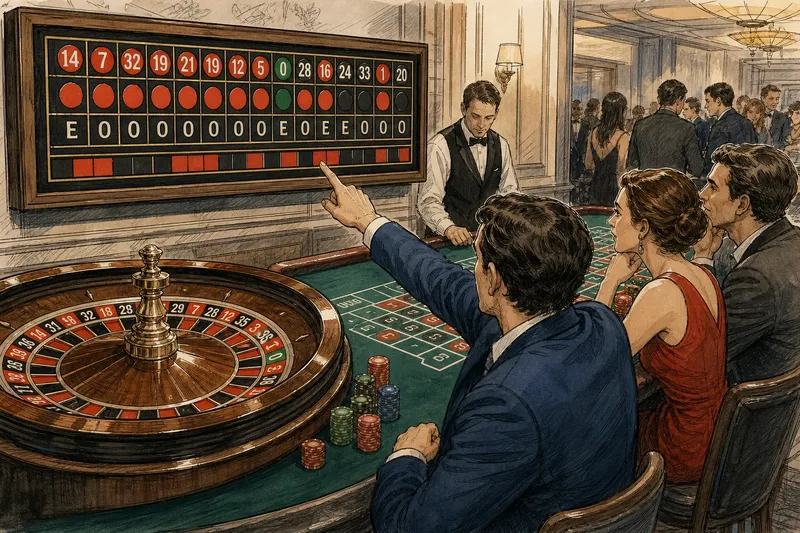
At a roulette table, a player glances from the wheel to the results board, then points at a cluster of numbers. The board has arranged chance into a pattern that looks almost deliberate. That is its cultural trick: it makes a sequence easy to read, even when the sequence offers no account of what comes next.
Roulette results boards are records, not forecasts. Their grids, colours and labels shape how players notice outcomes, giving a simple run the appearance of a plot. Understanding that effect means looking not only at probability, but also at the little piece of theatre built around the table.
What does a results board actually show?
A results board displays outcomes that have already occurred, often in a grid or scrolling sequence. Depending on the venue and game, it may show winning numbers, colours, odd or even results, or other classifications. Its function is to make recent history visible at a glance.
That can be useful when a player wants to recall what happened. But the board does not reveal why an outcome occurred, nor does it supply a forecast. A tidy arrangement is a design choice; it is not evidence that the results follow a tidy design.
Read the board as a log of completed rounds.
Why do grids and colours feel persuasive?
Humans are quick to see clusters, repetitions and gaps. A line of matching colours stands out; scattered results look less memorable. The board gives these observations a fixed place, so a player can point to a sequence and tell a story about it: the colour is running, the number is overdue, or a section of the wheel is active.
Those phrases add intention to a display that is only sorting past results. They also make the board feel like part of the game’s machinery, rather than a record beside it. In reality, its visual order comes from the interface; the outcomes do not become more predictable because they have been placed in rows.
Notice the pattern, but do not mistake the layout for a cause.
How does the board shape the table’s atmosphere?
Roulette is a public performance as well as a game. The wheel turns in view, the dealer calls the result, chips move, and the board extends the event into a running narrative. Players can compare impressions without needing to explain the rules from the beginning.
That shared attention gives the display a social role. Someone may point to a run, another player may disagree, and the table briefly becomes a discussion about what the next spin ought to do. The board supplies a common object for the conversation. It cannot settle the conversation’s prediction.
Casinos use displays to make information legible and to sustain attention. A player can enjoy that atmosphere while keeping the distinction between visible history and future chance intact.
What can a results board tell you?
It can tell you which results the display records and how the venue chooses to group them. It may help you review recent outcomes or follow a round you missed. It cannot, by itself, establish that a wheel is biased or that a result is about to repeat.
Imagine you arrive at a table where the board shows a run of red outcomes, and you had planned to choose black. You treat the display as a record, check that your intended bet fits the game you want to play, and decide not to change your choice merely because red appears repeatedly. The observable result is simple: your decision rests on your preference and the game’s stated rules, not on a claim that the display predicts the next spin.
If you have a concrete concern about equipment or procedure, a results board is not a tool for resolving it. Ask the venue through its appropriate process, or leave the game rather than using a wager as an experiment.
How can you read the display without overreading it?
- Observation: The board shows repeated outcomes. If you are tempted to call one “hot”, then treat that as a description of the past; if the label starts directing your bet, set the display aside and decide on other grounds.
- Observation: A result has not appeared recently. If you think it is due, then recognise that absence is not a schedule; if that belief is the only reason to play, wait or stop.
- Observation: The board groups results by colour or another category. If the grouping seems to reveal a trend, then check whether it merely classifies completed rounds; if it does, do not treat the category as a forecast.
- Observation: You missed a spin and want to know its outcome. If the display records that result, then use it to catch up; if the display is unclear, ask the dealer rather than infer from the surrounding pattern.
- Observation: Players around you are discussing what the next result “should” be. If their claim relies only on the board, then recognise it as conversation, not new information; if you would rather not play amid the pressure, step away.
- Observation: You suspect a problem with the game itself. If you have a specific procedural concern, then raise it with venue staff; if you have only noticed a run, do not treat that run as proof of a fault.
What do players ask about roulette results boards?
Can a results board predict the next spin?
No. It records outcomes that have already happened and arranges them for easy viewing. The arrangement does not make the next result follow a visible pattern.
Why do casinos display recent results?
A results display helps players see the recent history of a table and gives the game a shared visual record. It also supports the social rhythm of roulette, where players watch, compare and talk between rounds.
Does a repeated colour mean the opposite is due?
No. A run can attract attention without creating an obligation for the opposite outcome to appear. The board describes the run; it does not correct it.
Should I use the board to choose a bet?
You can look at it as part of the table’s atmosphere, but it does not provide a reliable forecast. Make choices according to the rules and your own entertainment limits, not because a display makes a sequence feel meaningful.
What is the most useful way to view a streak?
A streak is a feature of the story people tell about a sequence. The board gives that story a visible shape, and the table gives it an audience. Neither turns past results into instructions for the next round.
Roulette results boards are easiest to use when their role stays modest: they help you see what has happened. The wheel, not the display’s tidy rows, governs the game’s next outcome.